Carcassonne Loft - Penthouse Apartment
in the Languedoc, South of France
The Languedoc
   The
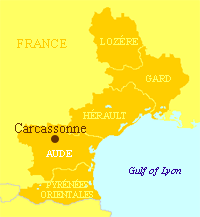
Languedoc-Roussillon is one of the most fascinating areas of Europe,
bordering the Mediterranean
Sea to theeast and the Pyrenees
Mountains to the south The
Languedoc-Roussillon is one of the most fascinating areas of Europe,
bordering the Mediterranean
Sea to theeast and the Pyrenees
Mountains to the south .It
benefits from a typical Mediterranean climate
and has an unusually rich wildlife,
a spectacular coast,
and surprising history.Things
to see include mountains,
rivers
and lakes, ancient
cities, towns,
villages,
thermal
springs, abbeys,
and cathedrals,
châteaux
and castles,
notably the famous mountain fortresses popularly known as Cathar
Castles. .It
benefits from a typical Mediterranean climate
and has an unusually rich wildlife,
a spectacular coast,
and surprising history.Things
to see include mountains,
rivers
and lakes, ancient
cities, towns,
villages,
thermal
springs, abbeys,
and cathedrals,
châteaux
and castles,
notably the famous mountain fortresses popularly known as Cathar
Castles.
   In
recent yearsit has become a popular French holiday
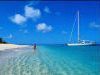
destination, with long sunny
days, Mediterranean
beaches, tourist
facilities, thousands of miles of walks,
and rides,
National
Parks and wildlife reserves (such as the Camargue
and the Cevennes),
thermal
springs and spas,
grottoes and caves, and vestiges of the Languedoc's long history,
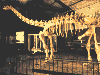
including dinosaur
bones and eggs, prehistoric human
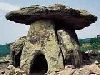
remains, dolmens
and megaliths, geology,
archaeology and palaeontology, Greek
and Roman
architecture, and everywhere reminders of the the Cathars,
the papal Crusade
against them, and the Papal
Inquisition that followed the crusade. In
recent yearsit has become a popular French holiday
destination, with long sunny
days, Mediterranean
beaches, tourist
facilities, thousands of miles of walks,
and rides,
National
Parks and wildlife reserves (such as the Camargue
and the Cevennes),
thermal
springs and spas,
grottoes and caves, and vestiges of the Languedoc's long history,
including dinosaur
bones and eggs, prehistoric human
remains, dolmens
and megaliths, geology,
archaeology and palaeontology, Greek
and Roman
architecture, and everywhere reminders of the the Cathars,
the papal Crusade
against them, and the Papal
Inquisition that followed the crusade.
   Things
to do in the Languedoc-Roussillon include a range of holidays,
including naturist
holidays and activity
holidays. Sports include a wide range of land
sports, water
sports, air
sports, mountain
sports, winter
sports, golf,
hunting,
shooting, hawking, and fishing.
There are also numerous cultural
activities, along with French regional food
specialties, and Languedoc wines.
Local festivals range from bull-running
to the
Fecos in Limoux
and from sea-jousting
in the north to celebrating la jour de St-Jean in the south by
fire-jumping. Things
to do in the Languedoc-Roussillon include a range of holidays,
including naturist
holidays and activity
holidays. Sports include a wide range of land
sports, water
sports, air
sports, mountain
sports, winter
sports, golf,
hunting,
shooting, hawking, and fishing.
There are also numerous cultural
activities, along with French regional food
specialties, and Languedoc wines.
Local festivals range from bull-running
to the
Fecos in Limoux
and from sea-jousting
in the north to celebrating la jour de St-Jean in the south by
fire-jumping.
   The
Languedoc has a rich prehistory
and history,
including Celts,
Hannibal
with his elephants, Greeks,
Romans,
Visigoths,
Moors,
and Franks.
Find out about the Medieval
period, before the area was annexed by France, when its language,
the
Langue d'Oc, was the premier literary language of Europe,
and its rulers, the Counts
of Toulouse, were the most tolerant and enlightened rulers
in the Western World. The
Languedoc has a rich prehistory
and history,
including Celts,
Hannibal
with his elephants, Greeks,
Romans,
Visigoths,
Moors,
and Franks.
Find out about the Medieval
period, before the area was annexed by France, when its language,
the
Langue d'Oc, was the premier literary language of Europe,
and its rulers, the Counts
of Toulouse, were the most tolerant and enlightened rulers
in the Western World.
Skiing
Ski areas cover the Catalan Pyrenees. There are 12 resorts at an altitude of 1200-2600m offering more than 200 downhill runs and 150 ski lifts. The Pyrenees region offers the 'Neiges Catalanes' ski-pass: a single priced ticket which allows you to ski across 10 resorts.
The following are downhill ski resorts in or near the Languedoc: Les Angles, Porté-Puymorens, Puy Valador, Prat-Peyrot, Font Romeu, Odeillo, Bolqueres, Pyrenees 2000, Ax-Bonascre, Mijanès, Ascou-Pailhères, Les Monts-d'Olmes, Goulier Neige, Le Puigmal 2600, and Camre d'aze.
- Les Angles. 29 pistes, 19 ski lifts, (+114km cross-country tracks). For the depth of snow and the number of pistes and ski lifts open.:
- Porté-Puymorens. 17 pistes, 13 skilifts, (+25km cross-country tracks). For the depth of snow and the number of pistes and ski lifts open.
- Puyvalador. For the depth of snow and the number of pistes and ski lifts open.
- Prat-Peyrot. For the depth of snow and the number of pistes and ski lifts open.
- Font Romeu, Odeillo, Bolqueres, Pyrenees 2000. 40 pistes, 33 skilifts, (+80 Km cross-country tracks). For the depth of snow and the number of pistes and ski lifts open.
- Ax-Bonascre. Near Ax-les-Thermes. el: 05 61 64 36 36. www.vallees-ax.com, email: vallees.ax@wanadoo.fr, Alt. 1400 m - 2400 m. 70 km of piste. 11 red, 2 black pistes. One of the largest Pyrenean sites. Three ski-stations. shops, snowshoe hire, forest skiing. Other activities such as hang-gliding on skis.
- Mijanès. Near Axat. Tel:04 68 20 40 44. Alt. 1530-2000 m. 9 km of piste, 9 pistes, including 2 red and 1 black. A family friendly station with a creche.
- Ascou-Pailhères. Near Axat. Tel 05 61 64 28 86, 05 61 64 21 23. Alt. 1500-2000 m. 20 km of piste. 15 pistes including 6 red and 2 black. Suitable for downhill lovers but also beginners.
- Les Monts-d'Olmes. Near Lavelanet. Tel:05 61 01 10 41. Alt. 1400-2000 m. 18.5 km of piste. 20 pistes including 9 red and 2 black. Family friendly.
- Goulier Neige. Near Foix. 05 61 64 88 99. Alt. 1500-2000 m. 6 km of piste. Tiny ski station. 6 pistes. Weekend skiing and horse riding.
- Le Puigmal 2600, Cerdagne, 19 pistes, 9 skilifts, (+30km cross-country tracks)
- Camre d'Aze. Eyne, 26 pistes, 17 skilifts (+nature reserve).
Distances from Carcassonne:
RESORT |
Drive Time From Carcassonne |
Kilometers from Carcassonne |
| Les Angles, 66210 |
1:49 |
111 |
Porté-Puymorens, 66760 |
2:06 |
133 |
Puyvalador, 66210, |
0:57 |
59 |
Font-Romeu-Odeillo-Via, 66120 |
2:04 |
127 |
Eyne, 66800 |
2:03 |
126 |
Goulier, 09220 |
1:48 |
122 |
Ascou-Pailhères, Ascou, 09110 |
1:43 |
102 |
Mijanès, 09460 |
1:28 |
87 |
Ax-les-Thermes, 09110 |
1:44 |
106 |
|