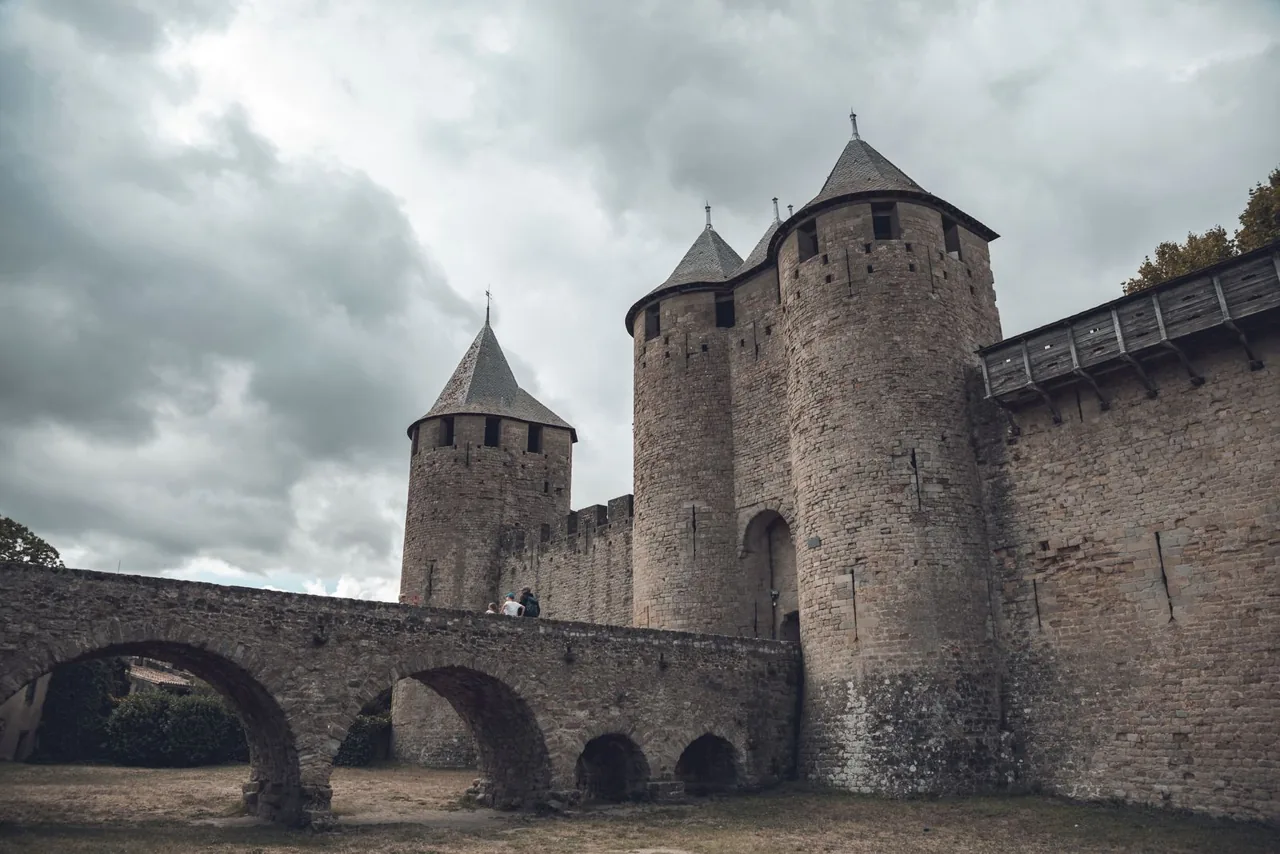
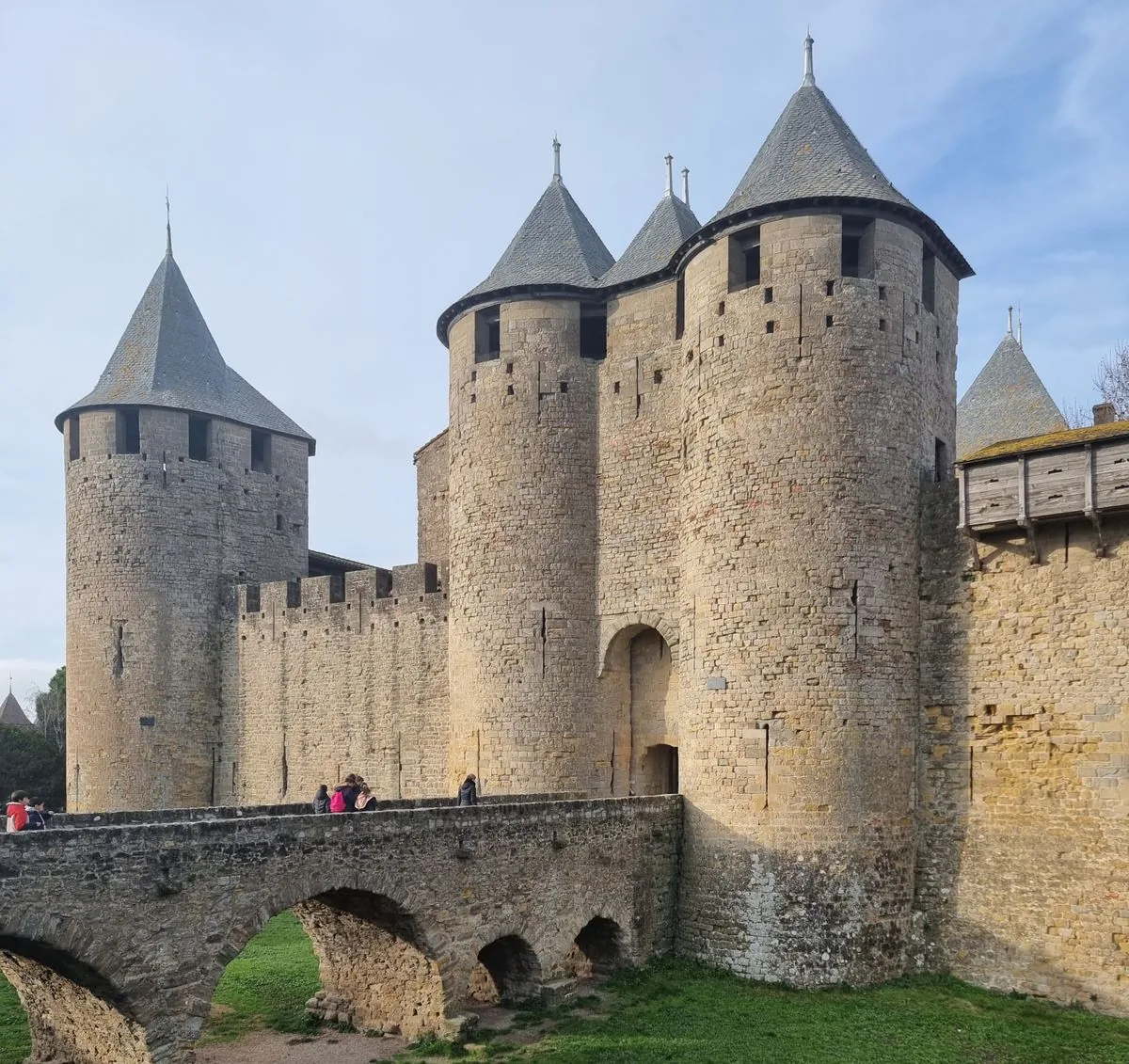
The double ring of walls and fifty-odd towers you see today owe a great deal to a nineteenth-century restoration, which was controversial at the time and remains debated among architectural historians. The history of the fortified city is worth reading before you visit, because knowing which parts are medieval and which are Viollet-le-Duc's interpretation changes how you look at it.
Go early or go late. Coach parties arrive from mid-morning and thin out by late afternoon, so the walls before nine and after six belong to almost nobody. In high summer the difference is not subtle: the same lane can be shoulder to shoulder at noon and empty at seven.
Use the Porte d'Aude rather than the main Porte Narbonnaise if you are walking up from the Bastide. It is the steeper approach and the more dramatic one, coming up through the lists between the two walls, and it is where most of the crowd is not.
The main street through the Cité is largely souvenir shops and is the least interesting part. Turn off it immediately. The basilica, the castle and the quieter lanes on the southern side are what people remember, along with the view back over the river and the Bastide.
It is free to walk into the Cité and around the lanes. There is a charge for the castle and the rampart walk, which is the part worth paying for and covered separately.